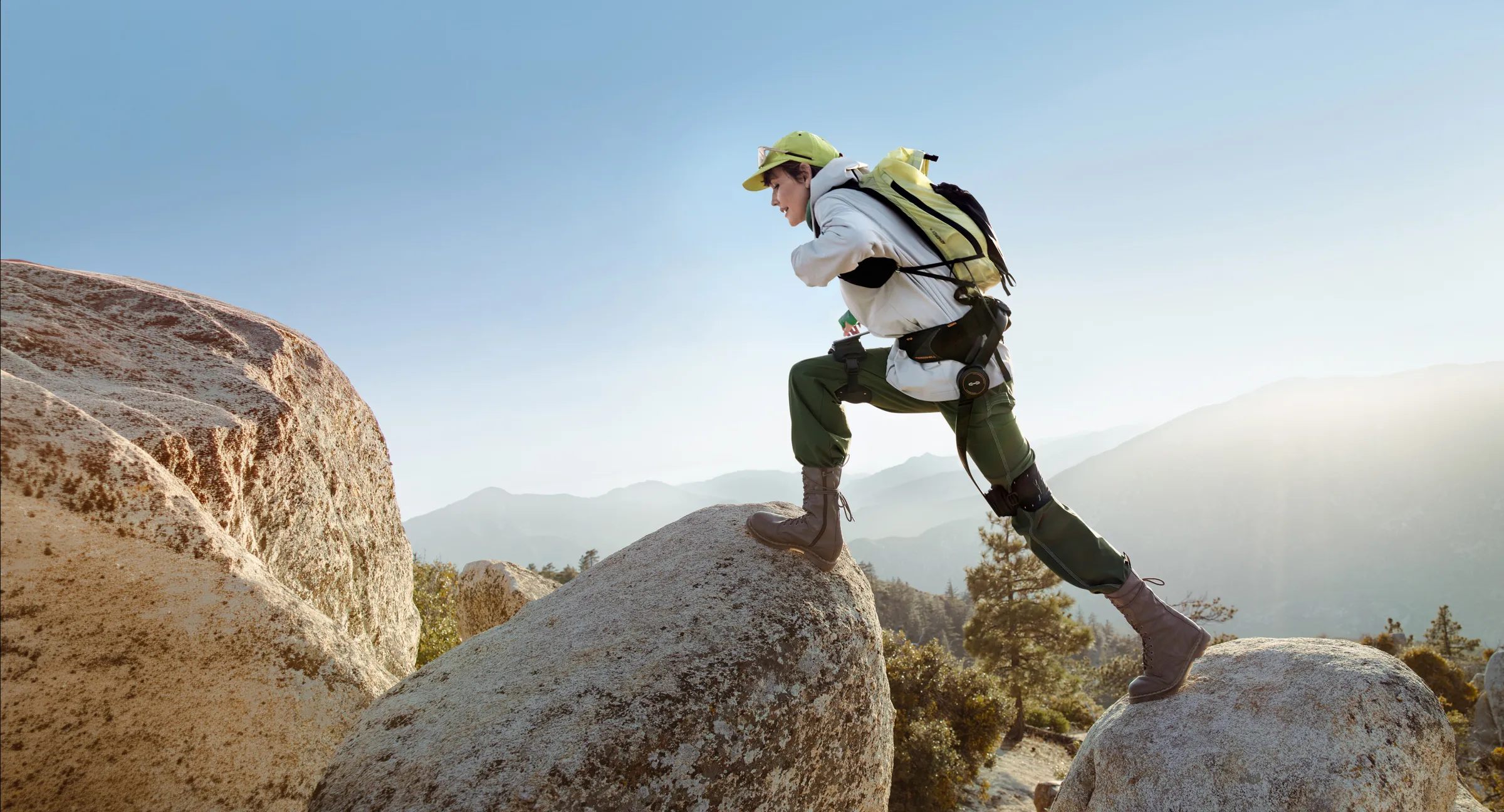

Walking exoskeletons are beginning to change how active living is discussed in Singapore, but they have not yet become a mainstream walking aid. Their significance lies in a new option between unaided walking and traditional mobility support: wearable systems that provide mechanical or powered assistance while the user continues to generate and control the movement.
Singapore is a relevant setting because the population is ageing, national policy emphasises active and socially connected ageing, and daily life often involves substantial walking through public transport, parks, shopping centres, airports and attractions. At the same time, lighter joint-specific exoskeletons and exosuits are moving beyond laboratories into product trials and early consumer use.
The evidence is promising but not uniform. Some devices have improved walking economy, speed or exercise outcomes in older adults, while other studies have found no meaningful benefit. Adoption will therefore depend on product-specific evidence, safe fitting, usability, accurate claims, affordability, local support and whether the device solves a real problem for the individual user.
| Direct answer Walking exoskeletons may expand the range of movement-support options available to independently mobile adults. They are most likely to influence active living when they are treated as optional, trial-based technology—not as a replacement for exercise, medical assessment, a cane, a walker or realistic pacing. |
| Question | Evidence-based answer |
|---|---|
| Are walking exoskeletons already common in Singapore? | No. Local awareness and availability are emerging; widespread adoption has not been established. |
| Why is Singapore a relevant market? | The country has an ageing population, strong active-ageing policies, dense pedestrian environments and extensive parks and transport networks. |
| What is changing technologically? | Devices are becoming lighter, more joint-specific and more responsive through sensors, compact motors, batteries and adaptive controllers. |
| Who may explore consumer movement support? | Adults who can stand and walk independently but want to evaluate assistance for longer activities, slopes, stairs or exercise. |
| What does research show? | Some studies report improved metabolic economy, speed or physical-function outcomes; others report no significant benefit. |
| Does an exoskeleton provide balance like a cane? | Usually not. A hip-assist device does not create another point of contact with the ground and should not be assumed to prevent falls. |
| Is every exoskeleton a medical device? | No. In Singapore, classification depends on the manufacturer’s documented intended purpose and claims. |
| What will determine adoption? | Fit, safety, comfort, ease of use, portability, evidence, price, trial access, training, servicing and social acceptance. |
| What is the realistic near-term role? | A specialised complement to exercise, transport, pacing and conventional aids—not a universal replacement for them. |
Active living is often measured through exercise minutes or daily steps, but the broader outcome is functional participation. It includes being able to visit family, use public transport, attend community activities, travel, shop, walk in parks and remain connected to other people.
The World Health Organization describes healthy ageing in terms of functional ability: the ability to meet basic needs, be mobile, build and maintain relationships, contribute to society and do what a person values. This makes walking capacity important not only for fitness, but also for independence and social participation.
Singapore’s Age Well SG plan follows a similar direction. The Ministry of Health states that the programme is intended to help seniors stay active, remain socially connected and receive support within their communities. Walking technology is relevant to this conversation only when it helps a person participate safely in valued activities.
Singapore’s resident population aged 65 and above reached approximately 789,600 in 2025, while the resident median age rose to 43.2 years. The Ministry of Health states that Singapore is projected to attain “super-aged” status in 2026 and that one in four citizens is expected to be aged 65 or above by 2030.
An ageing population does not mean that every older adult needs a device. Many remain active and independent. The more important point is that the number of people with different combinations of endurance, strength, balance, health conditions and lifestyle goals is increasing. This creates demand for a wider range of mobility and activity-support options rather than a single solution for “seniors.”
Public policy is also moving towards ageing in place. Age Well Neighbourhoods and Active Ageing Centres are intended to bring activity, care and senior-friendly infrastructure closer to where people live. Wearable movement support may become one small part of this wider ecosystem, alongside exercise, community programmes, transport, home design and healthcare.
Singapore’s compact urban form and connected public transport network mean that walking is embedded in everyday journeys. A trip may involve the route from home to the station, transfers between lines, long underground links, shopping-centre corridors, airport terminals, attractions and the return journey.
Recreational walking is also widely available. NParks manages more than 400 parks and reported an island-wide Park Connector Network of over 390 km, with a target of 500 km by 2030. These environments support active living, but they can also expose differences between being able to complete a short walk and being comfortable over several hours of accumulated movement and standing.
This helps explain why consumer exoskeleton discussions in Singapore are often framed around longer outings, parks, travel, family activities and stairs rather than complete inability to walk. The relevant user may remain independently mobile but be exploring how to allocate effort during a demanding day.
Exoskeletons were first widely recognised through industrial load support, military research and rehabilitation systems. Those categories still exist. What has changed is the growth of lighter devices that assist one or two joints and are intended to be worn by people who remain active participants in the movement.
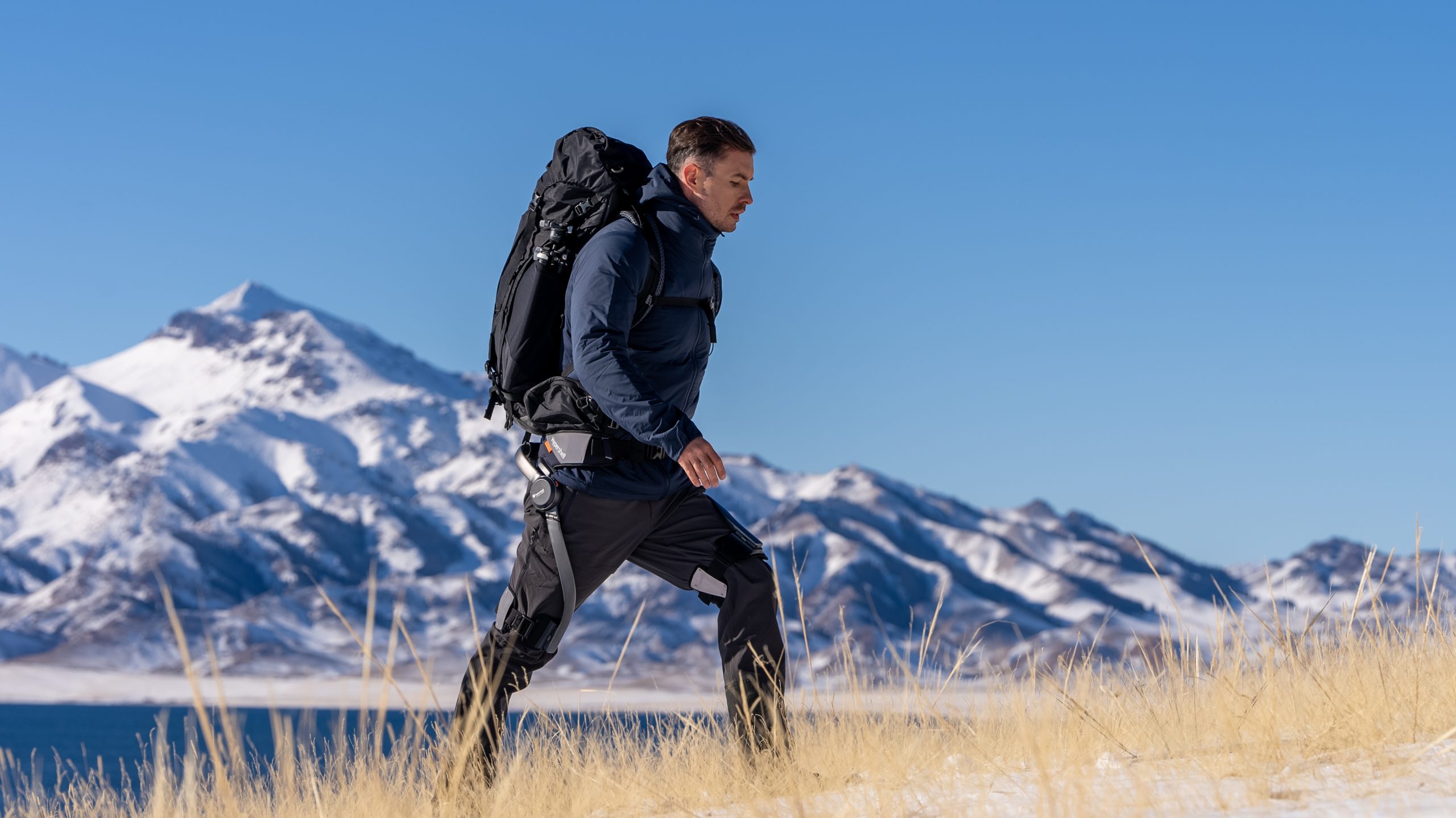
A modern augmentative hip or ankle exoskeleton typically uses sensors to estimate movement phase and a controller to determine when assistance should be applied. Powered systems add torque through motors; passive systems store and return mechanical energy through springs or elastic elements. Soft exosuits transmit force through textile interfaces and cables rather than a rigid frame.
These design changes can reduce size and improve portability, but they do not eliminate engineering trade-offs. Added mass, battery duration, heat, pressure points, noise, assistance timing and controller errors can affect real-world usefulness. A lighter-looking device is not automatically comfortable, safe or effective for every user.
| Driver | Why it matters in Singapore | Important qualification |
|---|---|---|
| Ageing and longevity | More adults want to preserve participation, travel and independence over a longer lifespan. | Age alone does not determine suitability or benefit. |
| Active-ageing policy | National programmes emphasise physical, mental and social participation in the community. | Technology should complement exercise and community design, not replace them. |
| Walking-intensive environments | Transport, parks, malls, airports and attractions can involve cumulative walking and standing. | Route planning, seating and transport may solve the problem more simply. |
| Smaller wearable systems | Hip and ankle devices can be lighter and less conspicuous than full-leg rehabilitation robots. | Weight distribution, fit and control quality still matter. |
| Adaptive sensing and control | Sensors can time assistance to the user’s movement and selected terrain. | Poor timing can feel unnatural or destabilising; individual adaptation is required. |
| Consumer access and local trials | People can evaluate products outside a research laboratory. | A demonstration is not proof of long-term benefit or safety. |
| Changing attitudes to assistive technology | Wearables are increasingly considered lifestyle tools rather than symbols of incapacity. | Acceptance still depends on appearance, ease of use, confidence and social context. |
| Rental and service models | Short-term access can reduce the commitment required to test a new category. | The trial must still include fitting, training, after-use review and clear eligibility. |
Research supports the possibility that some exoskeleton designs can improve selected measures of walking or exercise. It does not support a general statement that every exoskeleton makes every person walk farther, faster or with less fatigue.
| Study | Participants and device | Main finding | Why it cannot be generalised |
|---|---|---|---|
| Lee et al., 2023 | 60 community-dwelling older adults; six weeks of exercise with or without the EX1 hip-assist robot. | The exoskeleton exercise group showed greater improvements in gait, physical function, muscle effort and walking energy efficiency. | This was a structured training programme using one specific device and controller. |
| Lakmazaheri et al., 2024 | 10 healthy adults over 65; tethered ankle exoskeleton with approximately 240 minutes of training and optimisation. | Optimised assistance increased self-selected speed by 8% and reduced metabolic rate by 19% versus zero-torque walking in the device. | The system was tethered, highly personalised and tested under laboratory conditions. |
| Pîrșcoveanu et al., 2025 | 23 senior adults; passive hip exoskeleton, no-device and sham conditions. | No significant changes in gait or metabolic power were found. | It demonstrates that wearing an exoskeleton does not automatically produce a benefit. |
| Liu et al., 2026 | 10 older adults; soft hip exosuit assisting sit-to-stand and walking. | The feasibility study reported 1.8 more one-minute sit-to-stand repetitions and a 13.6% reduction in walking metabolic cost. | Small sample, short-term testing and a different product from consumer devices sold in Singapore. |
| Kramer et al., 2026 | 117 healthy older adults evaluated videos of three robotic mobility devices. | Participants identified benefits but raised concerns about ease of use, portability and integration into daily life. | Attitudes were measured from video evaluation rather than prolonged real-world use. |
The research therefore supports a product-specific and user-specific approach. The assisted joint, control strategy, torque timing, device mass, training period, walking task and outcome measure all influence the result. Laboratory reductions in metabolic cost should not be converted into guaranteed claims about holidays, parks, knee pain, fall prevention or distance for another commercial model.
The most realistic near-term impact is not that exoskeletons will replace normal walking or conventional aids. It is that some independently mobile adults may gain an additional option for selected situations.
| Potential contribution | What it may change | What it does not establish |
|---|---|---|
| Joint-level assistance | Provides mechanical or powered torque during selected phases of walking. | It does not guarantee lower whole-body effort or better balance. |
| Hands remain available | A hip-mounted product may not occupy either hand. | Hands-free use is not equivalent to the ground support of a cane. |
| Adjustable assistance | Different support levels may be tested for different users or tasks. | A higher setting is not necessarily safer or more effective. |
| Activity-specific use | A person may use the device for longer outings, approved slopes, stairs or exercise. | It does not make an unsuitable or excessive itinerary safe. |
| Trial before purchase | The exact fit and response can be assessed rather than inferred from specifications. | A short positive trial does not prove long-term adherence or outcome. |
| New consumer category | Movement support can be discussed outside complete mobility loss. | Lifestyle positioning does not remove regulatory, safety or evidence responsibilities. |
Singapore HealthHub recommends that adults aim for 150 to 300 minutes of moderate-intensity aerobic activity each week. Adults aged 50 and above are also encouraged to include strength, balance and flexibility activities at least three days a week.
A wearable device cannot reproduce all of these adaptations. Exercise develops cardiovascular fitness, muscle strength, balance, bone health, coordination and confidence. An exoskeleton may change the effort or mechanics of a particular task, but it should not become a reason to stop training the body within safe limits.
In some research, exoskeletons have been used as part of exercise programmes rather than as substitutes for exercise. That distinction matters. The positive outcome may come from the combination of structured training, repeated practice, professional supervision and the device—not from wearing the device alone.
A walking cane creates another point of contact with the ground and can provide stability or partial load sharing. A typical consumer hip-assist exoskeleton applies torque around the hips but does not directly bear body weight or provide the same balance function. Someone with repeated falls, marked instability or a need for substantial support may require a different mobility assessment.
New or worsening breathlessness, chest discomfort, dizziness, sudden weakness, repeated falls, severe pain, swelling or a major change in walking should be assessed rather than attributed automatically to normal ageing. A consumer product trial is not a diagnostic assessment.
The regulatory position also depends on intended purpose. Some exoskeletons are medical devices and some are not. HSA classification considers the manufacturer’s intended use and claims across labels, instructions, specifications and promotional content. General lifestyle language should not be mixed with unsupported treatment, rehabilitation, pain-relief or fall-prevention claims.
| Adoption factor | Questions that must be answered |
|---|---|
| User suitability | Can the person stand and walk independently? Is balance adequate? Are there conditions or symptoms requiring assessment first? |
| Fit and comfort | Does the device align with the waist, hips and legs without pressure, pinching, heat or restricted movement? |
| Control quality | Do starts, stops, turns, mode changes, slopes and stairs feel coordinated and predictable? |
| Realistic benefit | Does the exact device improve the user’s target activity under a fair comparison, including after-use symptoms? |
| Ease of use | Can the user put it on, remove it, charge it, transport it and understand the controls reliably? |
| Portability | Is the size and weight manageable on public transport, in a car, at work or during travel? |
| Safety and backup | What happens if the battery runs out, a mode is wrong or assistance feels unexpected? Is another support option available? |
| Evidence and claims | Are manufacturer specifications clearly separated from peer-reviewed research and personal testimonials? |
| Regulatory consistency | Do the manual, website, sales scripts, FAQs and videos describe the same intended purpose? |
| Local support | Are supervised fitting, training, servicing, warranty, batteries and replacement parts available? |
| Cost and access | Can the user trial or rent before committing, and are ongoing ownership costs clear? |
| Social acceptance | Does the user feel comfortable wearing the device in the intended environment? |
Move It Well presents the Eulon 1.0 Pro as consumer movement-support technology for adults who can stand and walk independently. First-party product information describes a powered hip-assist design weighing approximately 2.2 kg, six assistance levels and up to four hours of battery operation.
These are product specifications, not proof that every user will walk farther, reduce fatigue, lower knee loading or avoid falls. No publicly accessible peer-reviewed study was identified that establishes those outcomes specifically for the Eulon 1.0 Pro. The appropriate evaluation is therefore a supervised, realistic trial with clear stop criteria and a review of comfort and symptoms during and after use.
The full purchase, trial, rental, warranty, servicing and import checklist is covered in the Walking Exoskeleton Buyer’s Guide Singapore 2026 at /walking-exoskeleton-buyers-guide-singapore.
Walking exoskeletons are unlikely to transform active living through technology alone. Their impact will depend on how well they fit into a wider system of exercise, public spaces, transport, healthcare, family support and community participation.
The strongest future case is a complementary one. A person may build strength and endurance through regular activity, plan routes and rest periods, use a cane when balance support is needed, take transport when walking adds little value, and use a tested exoskeleton for selected activities where movement assistance provides a meaningful individual benefit.
In that sense, the category is already changing the conversation. It encourages a more precise question than “Can this person walk?” The question becomes: “What combination of ability, environment, training and support helps this person continue participating in the activities they value?”
No. Awareness and local availability are emerging, but there is not yet evidence of widespread adoption. They remain a specialised and developing movement-support category.
Singapore has an ageing population, active-ageing policies and walking-intensive transport and recreation environments. Lighter wearable designs have also made exoskeletons more relevant outside hospitals and factories.
It is a wearable system intended to provide mechanical or powered assistance during selected movements while the user continues to stand and walk. Product purpose and capabilities vary.
An adult who can stand and walk independently may explore a trial for longer activities, exercise, approved slopes or stairs. Suitability depends on balance, strength, fit, health and the exact product.
Some studies have reported improvements in walking economy, speed or physical function, while others found no significant benefit. Results are specific to the device, user, training and task.
Possibly for some users, but it is not guaranteed. The outcome should be tested with the exact device over a realistic duration rather than inferred from another study or a motor specification.
Some devices have reduced metabolic cost under controlled conditions. Other devices have not. Fatigue also has medical, fitness, environmental and pacing causes that a device may not address.
No. Exercise develops cardiovascular fitness, strength, balance, coordination and bone health. A device may assist a task or be used within training, but it does not replace an appropriate activity programme.
No. A cane provides a ground support point, balance assistance and potential load sharing. A typical hip exoskeleton assists joint movement and should not be assumed to provide the same stability.
Fall prevention should not be assumed. Assistance timing can affect stability, and individual responses vary. People with repeated falls or substantial instability need appropriate assessment.
Some are and some are not. HSA classification depends on the manufacturer’s documented intended purpose and claims across the complete product presentation.
Fit, comfort, weight, heat, control timing, ease of use, portability, price, battery management, evidence, social acceptance and access to local support.
A trial allows the user to assess fit, starts, stops, turns, balance, approved terrain, comfort and after-use symptoms. It also tests whether the product solves the intended problem.
A specialised complement to active ageing, exercise, transport, pacing and conventional aids. Wider use will depend on stronger product-specific evidence and practical everyday integration.
1. Original source article. 10-Why Walking Exoskeletons Are Changing Active Living in Singapore.docx. Move It Well source draft.
2. Singapore Department of Statistics. Population and Population Structure: Latest Data, 2025. https://www.singstat.gov.sg/find-data/search-by-theme/population/population-and-population-structure/latest-data
3. Ministry of Health Singapore. Ageing in the Community / Age Well SG. Updated 7 April 2026. https://www.moh.gov.sg/ageing-well/ageing-in-the-community/
4. Ministry of Health Singapore. Three More Age Well Neighbourhoods to Strengthen Support for Seniors in the Community. 7 May 2026. https://www.moh.gov.sg/newsroom/three-more-age-well-neighbourhoods-to-strengthen-support-for-seniors-in-the-community/
5. Health Promotion Board. National Population Health Survey 2024 findings. Updated 17 June 2026. https://www.hpb.gov.sg/community/national-population-health-survey/survey-findings/
6. HealthHub Singapore. Healthy Ageing Hub: 7 Easy Exercises to an Active Lifestyle. https://www.healthhub.sg/programmes/healthy-ageing/keeping-active/7-easy-exercises/
7. National Parks Board. About Us: Parks and Park Connector Network. https://www.nparks.gov.sg/who-we-are/about-us
8. World Health Organization. Healthy ageing and functional ability. https://www.who.int/news-room/questions-and-answers/item/healthy-ageing-and-functional-ability
9. Lee S-H, Kim J, Lim B, et al. Exercise with a wearable hip-assist robot improved physical function and walking efficiency in older adults. Scientific Reports. 2023;13:7269. DOI: 10.1038/s41598-023-32335-8. https://pubmed.ncbi.nlm.nih.gov/37142609/
10. Lakmazaheri A, et al. Optimizing exoskeleton assistance to improve walking speed and energy economy for older adults. Journal of NeuroEngineering and Rehabilitation. 2024;21:1. DOI: 10.1186/s12984-023-01287-5. https://pubmed.ncbi.nlm.nih.gov/38167151/
11. Pîrșcoveanu C-I, et al. Walking with a Passive Hip Exoskeleton and Wearables: Gait Characteristics and Metabolic Power in Senior Adults. Sensors. 2025. DOI: 10.3390/s26010100. https://pubmed.ncbi.nlm.nih.gov/41516533/
12. Liu Y, et al. Enhancing sit-to-stand transitions and walking efficiency in older adults with a soft robotic suit. Nature Communications. 2026. DOI: 10.1038/s41467-026-75528-1. https://pubmed.ncbi.nlm.nih.gov/42469269/
13. Kramer L, et al. Evaluation of robotic mobility-assistive devices for older adults: a mixed-methods online study. Disability and Rehabilitation: Assistive Technology. 2026. DOI: 10.1080/17483107.2026.2676043. https://pubmed.ncbi.nlm.nih.gov/42218911/
14. Health Sciences Authority Singapore. Regulatory Overview: What Is a Medical Device? https://www.hsa.gov.sg/medical-devices/regulatory-overview/
15. Move It Well. Eulon 1.0 Pro specifications and intended-user information. First-party product information, August 2026.
Questions, collaborations, or just a chat about travel? Reach out anytime — I’m always ready for the next adventure.