
Keeping up with grandchildren does not mean matching a child’s speed or energy. It means maintaining enough walking endurance, leg strength, balance and recovery capacity to take part safely in the family activities that matter: visiting attractions, walking through parks, travelling together, attending school events and spending longer periods on your feet.
The most reliable approach combines regular aerobic activity, strength and balance training, realistic pacing, thoughtful route planning and appropriate health assessment when symptoms are new or worsening. For adults who already stand and walk independently, wearable movement-support technology may be one optional tool, but it should not replace exercise, balance support, medical care or a well-planned outing.
This article uses “grandparents” as a familiar family context, but the same guidance applies to older adults who want to remain involved with younger relatives, community groups or intergenerational activities.
| Question | Evidence-based answer |
|---|---|
| What does “keeping up” mean? | Participating safely and meaningfully, not walking at a child’s pace. |
| What abilities matter most? | Aerobic endurance, lower-body strength, balance, mobility, confidence and recovery. |
| How much activity is recommended? | Generally 150–300 minutes of moderate aerobic activity weekly, plus strength, balance and flexibility work. |
| Why are outings tiring? | Walking, standing, heat, crowds, queues, stairs, carrying bags and frequent pace changes accumulate. |
| What helps most? | Gradual training, planned breaks, good footwear, hydration, transport options and a lower-walking backup plan. |
| Can a walking exoskeleton help? | Possibly for some independent walkers; results vary by device, fit, task and individual. |
| Does it replace a cane or walker? | No. A consumer hip-assist exoskeleton is not primarily a balance or body-weight-support device. |
| When should assessment come first? | New chest discomfort, unusual breathlessness, dizziness, repeated falls, sudden weakness or severe pain. |
The World Health Organization defines healthy ageing as developing and maintaining the functional ability that enables wellbeing in older age. Functional ability includes being mobile, building and maintaining relationships, meeting daily needs and continuing to do what a person values.
This is a more useful framework than asking whether a grandparent can walk as quickly as a child. The practical question is whether the adult can participate in the outing with acceptable effort, maintain safe balance, recover after activity and remain confident enough to accept future invitations.
A 2025 Singapore study of 6,434 residents aged 56 to 75 found that higher intrinsic capacity was positively associated with greater social participation. The research was cross-sectional and does not prove cause and effect, but it supports the broader principle that maintaining physical and mental capacity helps people remain involved in social life.
Family outings often combine several physical demands that are not captured by a simple distance estimate. A visit to the zoo, Gardens by the Bay, Jewel Changi Airport, a museum or a shopping district may involve repeated walking, standing in queues, changes in direction, stairs, uneven surfaces and long periods without a convenient seat.
Research from a Singapore neighbourhood photovoice study also found that walking routes, resting places, destinations and social environments influenced older adults’ physical activity and participation. This means that route design and access to seating are not minor details; they can determine whether an outing remains manageable.
Time with grandchildren can create meaningful opportunities for movement and social connection, but grandparenting does not automatically make an older adult more physically active.
A large U.S. observational study using data from 17,851 adults over 50 found that greater grandparenting intensity was associated with lower physical activity. The authors discussed several possible explanations, including time constraints and selection effects. The study does not mean that caring for grandchildren is unhealthy. It suggests that grandparents who provide substantial care may need to protect time for their own exercise, rest and health appointments rather than assuming that caregiving itself provides enough physical activity.
The practical lesson is balance: family participation can support purpose and connection, but a grandparent still benefits from a separate routine that maintains strength, balance and endurance.
The ability to continue walking at a comfortable pace without excessive fatigue. It is built through regular aerobic activity and gradual increases in time or distance.
Strength in the hips, thighs, calves and trunk supports stair climbing, standing from a chair, carrying light items and controlling each step.
Balance helps with curbs, uneven surfaces, crowded areas, sudden stops and changes of direction. It should be trained separately from walking endurance.
Functional mobility includes standing up, turning, stepping over small obstacles, entering vehicles and moving between sitting and walking.
Sleep, hydration, nutrition, medication management and rest influence how well the body recovers after a long day. Recovery becomes more important when outings are frequent or caregiving is intensive.
Singapore HealthHub and the World Health Organization recommend that adults generally aim for 150 to 300 minutes of moderate-intensity aerobic activity each week. Adults aged 50 and above should also include strength, balance and flexibility activities, with multicomponent activity emphasised on at least three days a week.
These are population-level guidelines rather than a personalised prescription. Someone who is currently inactive, has a health condition, has recently fallen or experiences pain should begin at an appropriate level and seek professional advice when needed.
| Training area | Examples | Why it helps during outings |
|---|---|---|
| Aerobic endurance | Walking, cycling, swimming, dancing | Supports longer periods of movement and faster recovery. |
| Strength | Sit-to-stand, supported squats, step-ups, resistance bands | Supports stairs, standing, carrying light items and leg control. |
| Balance | Heel-to-toe walking, single-leg stance with support, tai chi | Supports direction changes, uneven ground and fall prevention. |
| Flexibility and mobility | Gentle calf, thigh, hip and shoulder mobility | Helps with comfortable movement, reaching and changing positions. |
| Functional practice | Standing from benches, short slopes, controlled turns | Makes training more similar to real family outings. |
The following framework is a general example for an independently mobile adult who is already safe to exercise. It is not suitable for everyone and should be adjusted to current ability.
| Week | Walking focus | Strength and balance | Practical test |
|---|---|---|---|
| 1: Establish a baseline | Complete several comfortable walks and note time, fatigue and recovery. | Practise sit-to-stand and supported balance exercises two to three times. | Identify the longest comfortable continuous walking period. |
| 2: Add controlled intervals | Alternate comfortable walking with slightly quicker or longer segments. | Add lower-body strength and stepping practice. | Test a route with benches, curbs and short changes in pace. |
| 3: Rehearse outing demands | Complete one longer session with planned breaks rather than one continuous walk. | Practise turns, standing from different seats and approved stairs. | Wear the intended shoes and carry the planned light day bag. |
| 4: Complete a realistic rehearsal | Repeat a shortened version of the outing at a manageable pace. | Reduce training immediately before the event if recovery is slow. | Confirm transport, seating, hydration and backup options. |
Progress should be based on how the person feels during the activity and later the same day or the next morning. Increasing pain, swelling, dizziness, unusual breathlessness or prolonged exhaustion are reasons to reduce the load and seek advice where appropriate.
| Planning question | Good preparation | Warning sign |
|---|---|---|
| Route | Known distance, surfaces, stairs, lifts and exits. | Unclear route with no easy transport alternative. |
| Rest | Seats or indoor breaks scheduled before exhaustion. | Waiting until the adult is already unstable or severely fatigued. |
| Weather | Water, shade, suitable clothing and heat timing planned. | Long outdoor exposure during the hottest period without recovery. |
| Footwear and bag | Tested shoes and a light, balanced load. | New shoes, heavy shoulder bag or equipment not previously tested. |
| Child supervision | Another adult can respond quickly to the child if needed. | Grandparent must run, lift or react beyond safe ability. |
| Return journey | Energy and transport reserved for getting home. | All available energy used before the final transfer. |
| Health plan | Medicines, emergency contacts and stop criteria known. | New symptoms dismissed as normal ageing. |
Singapore’s Age Well SG programme is intended to help seniors remain active, socially connected and supported within their communities. The Ministry of Health describes active ageing as staying healthy, mentally active and connected to loved ones and friends.
Active Ageing Centres and HealthHub exercise resources can help adults build a regular routine outside occasional family outings. This matters because fitness is easier to maintain through consistent weekly activity than through sporadic, demanding days with grandchildren.
HealthHub’s Healthy Ageing Hub includes strength, balance and flexibility exercises designed for adults aged 50 and above. Examples such as sit-to-stand and standing hip extension are directly relevant to everyday tasks including climbing stairs and carrying grandchildren or groceries.
Reduced endurance can reflect deconditioning, but it can also be related to cardiovascular, respiratory, neurological, musculoskeletal, medication or other health issues. Do not automatically attribute a sudden change to age.
An adult with these symptoms should seek appropriate medical assessment rather than relying on a new walking device or simply reducing activity without understanding the cause.
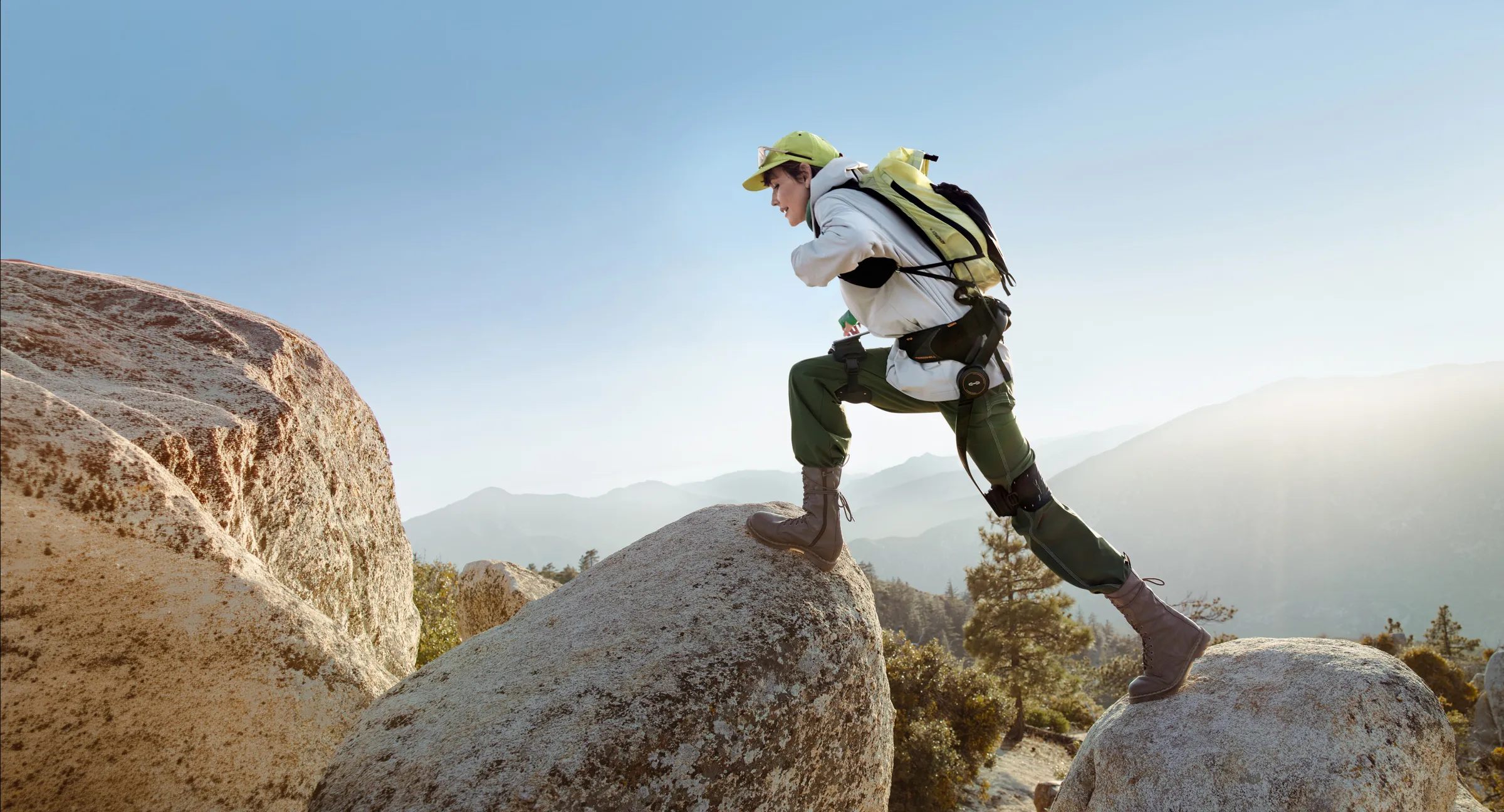
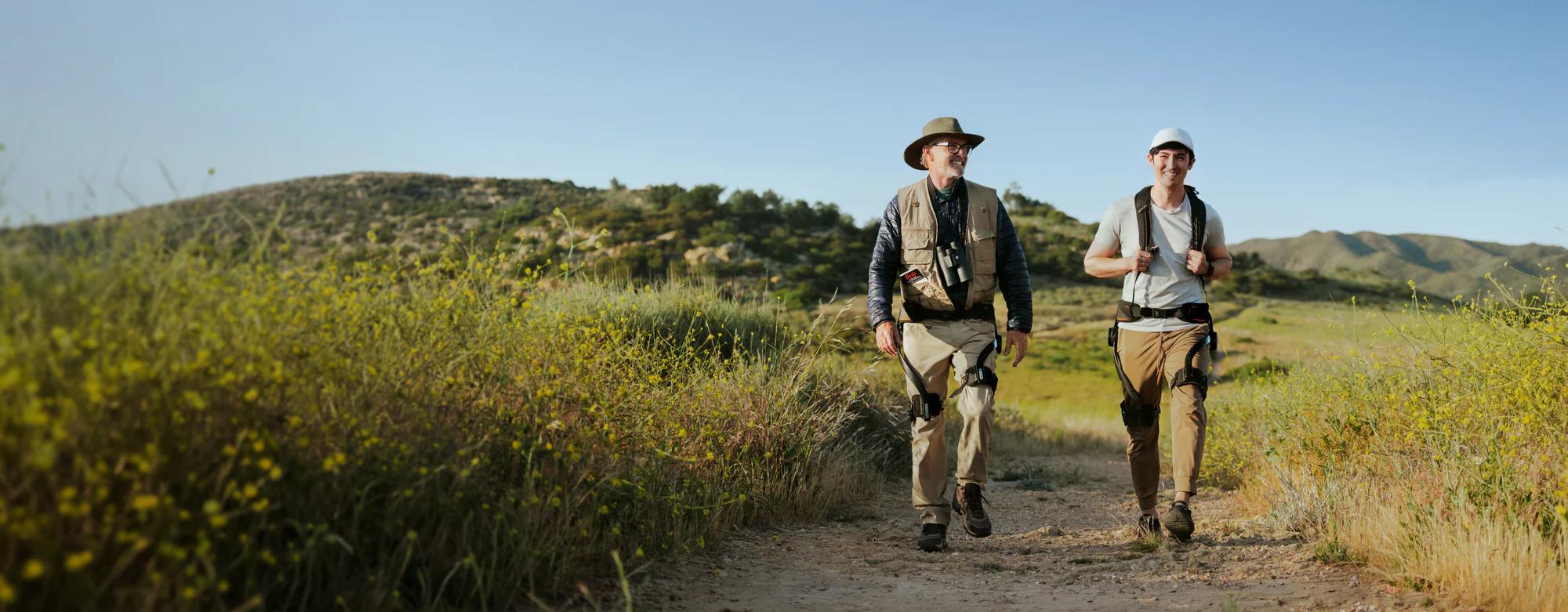
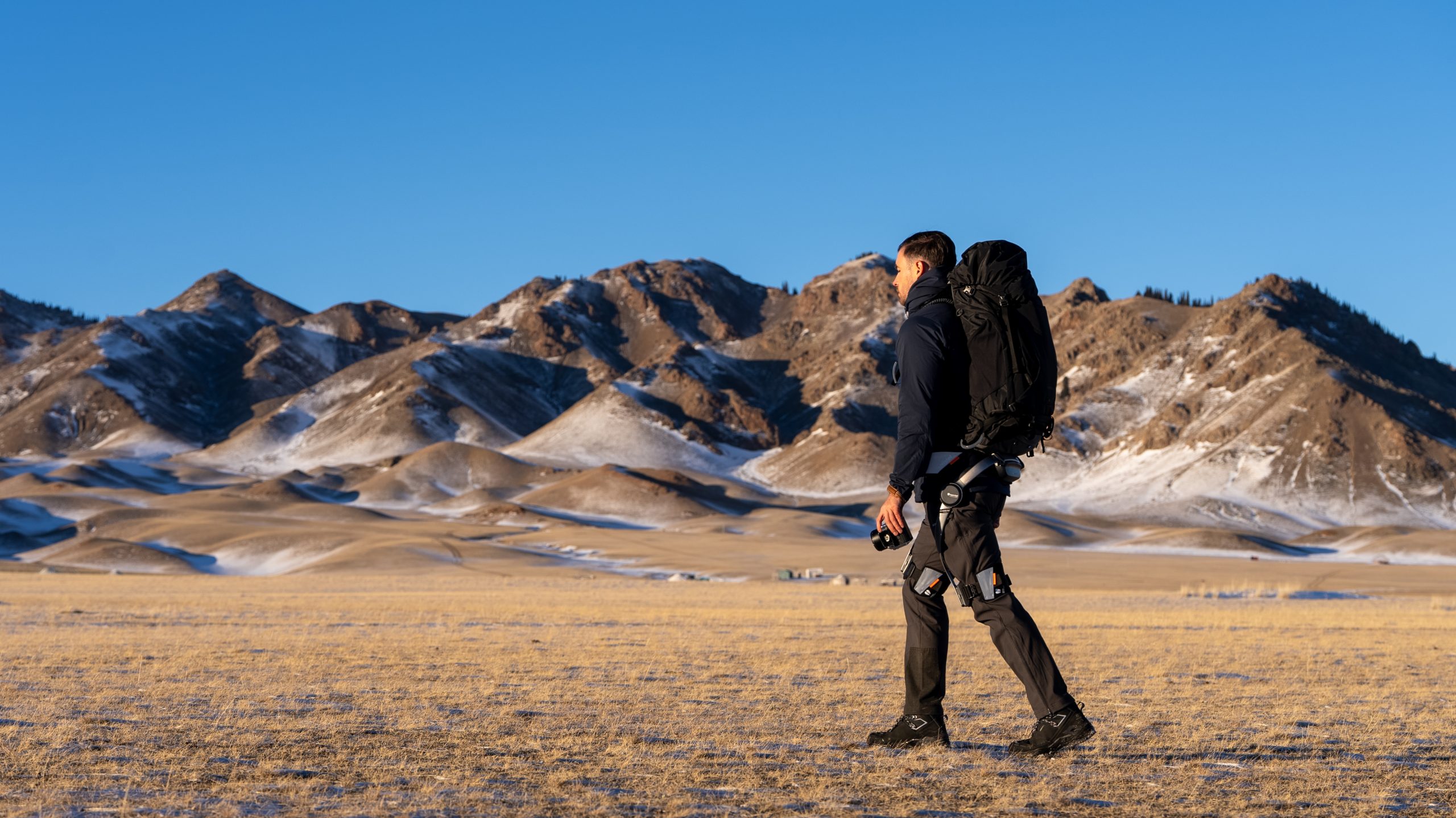
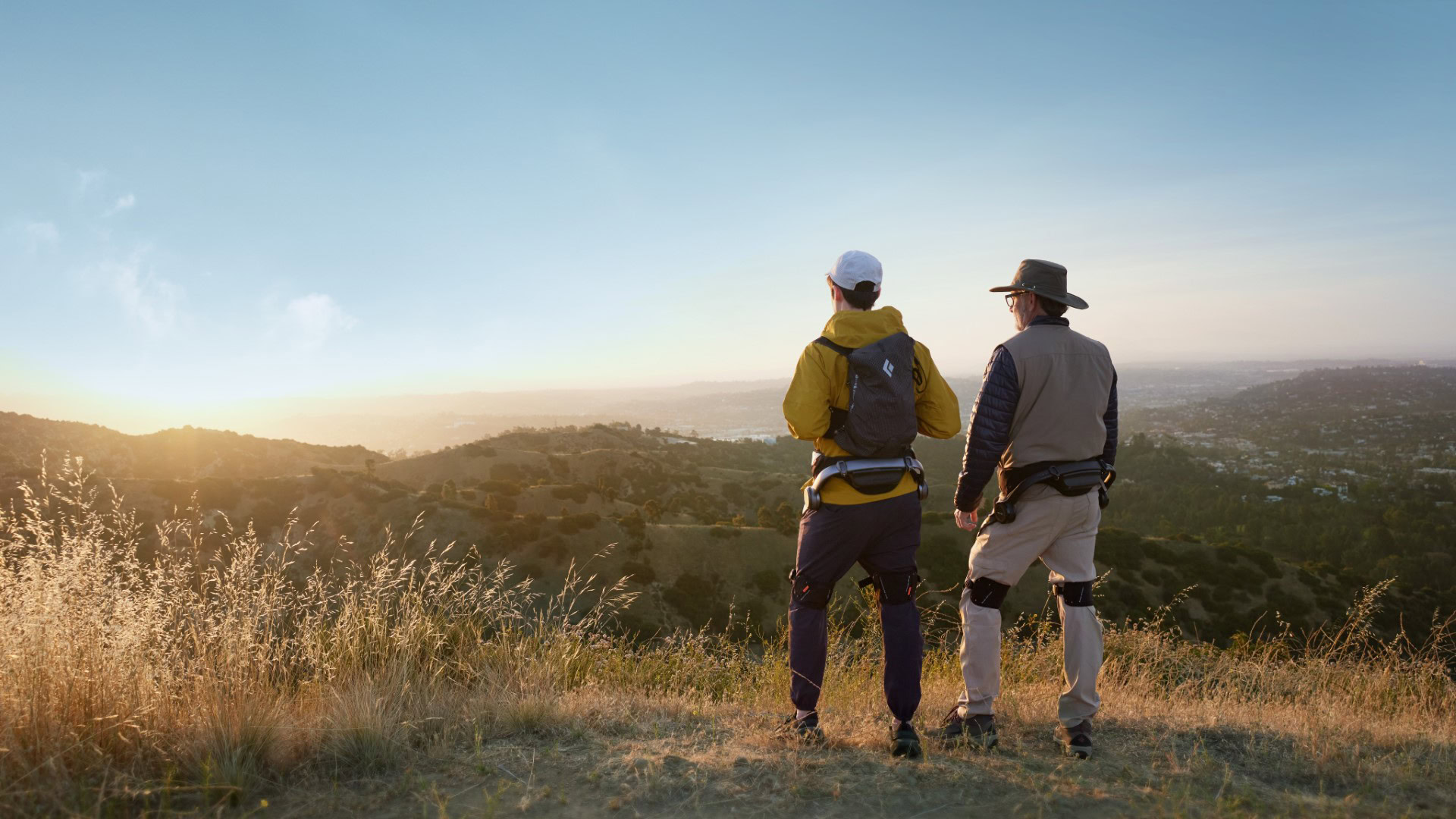
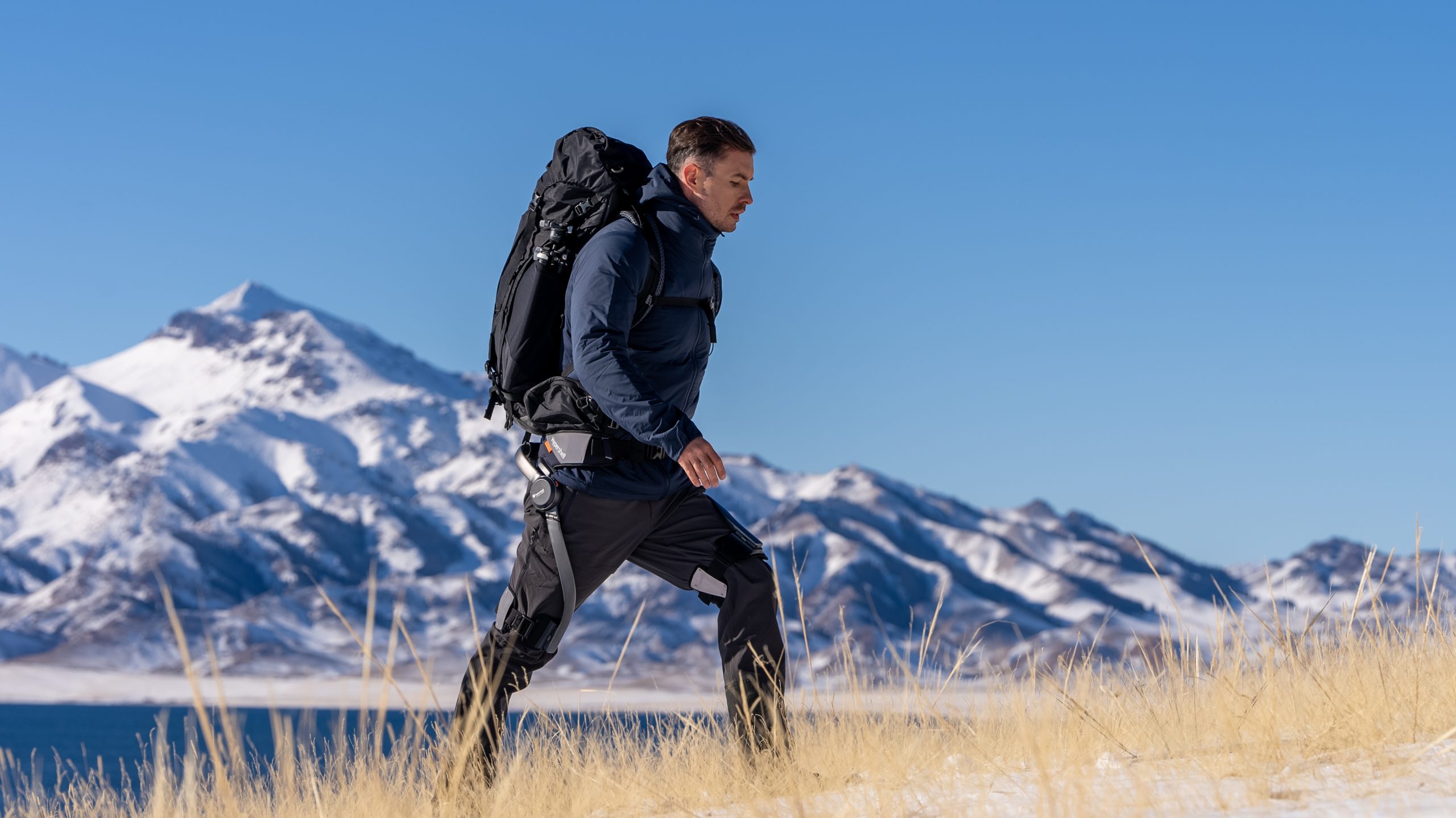
For an adult who can stand and walk independently, a consumer walking exoskeleton may be explored as optional movement support for longer outings, slopes or stairs where the product is designed for those tasks. It is not primarily a balance aid, does not provide body-weight support and should not be assumed to prevent falls.
Research on older adults is promising but mixed. In a 2023 randomised study, 60 community-dwelling older adults who completed six weeks of exercise with a specific wearable hip-assist robot improved gait, physical function and walking efficiency more than a control exercise group. A separate study of ten adults over 65 found optimised tethered ankle assistance increased walking speed and reduced metabolic rate after extensive training. However, a 2025 study of 23 senior adults using a passive hip exoskeleton found no significant improvement in gait or metabolic power.
These findings cannot be transferred directly to every commercial product. Device design, assisted joint, control timing, weight, training and the individual user all influence the result.
Move It Well presents the Eulon 1.0 Pro as a powered hip-assist consumer movement-support exoskeleton for adults who can stand and walk independently. First-party specifications describe a weight of approximately 2.2 kg, six support levels and up to four hours of battery operation. These specifications do not guarantee that a user will walk farther or keep pace with grandchildren.
| Trial question | What to observe | Do not continue when |
|---|---|---|
| Can the user put it on and remove it safely? | Independent or appropriately assisted fitting without rushing. | Straps, alignment or controls cannot be managed reliably. |
| Does assistance feel coordinated? | Natural starts, stops, turns and normal walking pace. | The device forces the step or causes unexpected movement. |
| Does balance remain stable? | No new swaying, grabbing or need for physical support. | The user becomes less stable or more fearful. |
| Does it remain comfortable? | No pressure, numbness, pinching or restricted movement. | Pain or discomfort increases during or after use. |
| Can it handle the intended task? | Approved slopes, stairs or longer walking tested under supervision. | The planned activity exceeds the product’s approved use. |
| Is the family plan still realistic? | Breaks, transport and another supervising adult remain available. | The device is treated as a reason to overextend the outing. |
The full comparison of intended purpose, fitting, battery, warranty, rental, servicing and product support is covered in the Walking Exoskeleton Buyer’s Guide Singapore 2026 at /walking-exoskeleton-buyers-guide-singapore.
| May help with | Does not guarantee |
|---|---|
| Additional assistance during selected phases of walking. | That every user will walk farther or feel less tired. |
| Making a longer outing feel more manageable for some users. | The same result shown in a study of another device. |
| Supporting an independently mobile adult during approved activities. | Balance support equivalent to a cane or walker. |
| Providing a trial-based option before a demanding family day. | Treatment of pain, arthritis, weakness or another condition. |
| Helping the user allocate effort during specific activities. | Safe participation in an outing that exceeds the person’s overall capacity. |
Build walking endurance gradually, train leg strength and balance, plan breaks and transport, use suitable footwear and seek assessment when symptoms are new or worsening. The goal is safe participation, not matching a child’s pace.
Walking helps aerobic endurance, but strength and balance are also important for stairs, standing, turns and uneven surfaces. A complete routine combines aerobic, strength, balance and flexibility work.
General guidance recommends 150 to 300 minutes of moderate-intensity aerobic activity weekly, together with strength work and multicomponent balance-focused activity. Individual health and ability should determine the starting level.
They often include walking, standing, queues, stairs, heat, carrying items, changes of pace and a long return journey. The accumulated time on the feet may be more important than the map distance.
Childcare can involve movement, but it may also reduce time for planned exercise and recovery. A large observational study found greater grandparenting intensity was associated with lower physical activity, so grandparents should protect time for their own routine.
Walking, sit-to-stand, supported squats, step-ups, standing hip extension, calf raises and safe balance exercises can support everyday function. Exercises should match the person’s ability.
Possibly for some adults who already stand and walk independently. Benefits vary by device, fit, activity and user, so a supervised fitting and realistic trial are essential.
It should not be assumed to prevent falls. A consumer hip-assist exoskeleton provides movement assistance but may not provide the balance or stability support of a cane or walker.
Knee pain has many causes. A walking exoskeleton is not a treatment. Persistent, worsening, swollen or unstable knee symptoms should be assessed before a product trial.
No product-specific peer-reviewed study was identified that proves every Eulon user will walk farther or keep up with grandchildren. Move It Well should present specifications and supervised trial outcomes separately from research on other devices.
Check route length, seating, transport, weather, food and toilet stops. Choose priority attractions, schedule breaks and keep a lower-walking backup plan.
Seek assessment for chest discomfort, unusual breathlessness, dizziness, sudden weakness, repeated falls, severe pain, swelling, recent injury or a marked decline in walking ability.
Some exoskeletons are medical devices and some are not. HSA classification depends on the product’s documented intended purpose and claims. Move It Well presents Eulon as general movement-support technology, not treatment or rehabilitation.
Complete a supervised fitting and trial that includes normal pace, starts, stops, turns, sitting, approved slopes or stairs and a longer realistic walking period. Review comfort and symptoms after the trial as well as during it.
1. Original source article. 7-Keeping Up With Your Grandchildren.docx. Move It Well source draft.
2. World Health Organization. Healthy ageing and functional ability. https://www.who.int/news-room/questions-and-answers/item/healthy-ageing-and-functional-ability
3. Ministry of Health Singapore. Ageing in the community. Last updated 7 April 2026. https://www.moh.gov.sg/ageing-well/ageing-in-the-community/
4. HealthHub Singapore. Healthy Ageing Hub: 7 Easy Exercises to an Active Lifestyle. https://www.healthhub.sg/programmes/healthy-ageing/keeping-active/7-easy-exercises/
5. HealthHub Singapore. 7 Fall Prevention Tips for Seniors and Caregivers. https://www.healthhub.sg/well-being-and-lifestyle/active-ageing/tips-on-fall-prevention
6. Ma S, et al. Exploring the relationship between intrinsic capacity and social participation in healthy ageing: Evidence from Singapore. https://pubmed.ncbi.nlm.nih.gov/40036937/
7. Mahendran R, et al. Neighbourhood environmental influences on older adults’ physical activities and social participation in Singapore: A photovoice study. https://pubmed.ncbi.nlm.nih.gov/36041239/
8. Drentea P, Pavela G, Tian L, Locher JL. Grandparenting and Physical Activity. Journal of Aging and Health. https://pubmed.ncbi.nlm.nih.gov/39180377/
9. Lee S-H, Kim J, Lim B, et al. Exercise with a wearable hip-assist robot improved physical function and walking efficiency in older adults. Scientific Reports. 2023;13:7269. https://pubmed.ncbi.nlm.nih.gov/37142609/
10. Lakmazaheri A, et al. Optimizing exoskeleton assistance to improve walking speed and energy economy for older adults. Journal of NeuroEngineering and Rehabilitation. 2024;21:1. https://pubmed.ncbi.nlm.nih.gov/38167151/
11. Pîrșcoveanu C-I, et al. Walking with a Passive Hip Exoskeleton and Wearables: Gait Characteristics and Metabolic Power in Senior Adults. Sensors. 2025. https://pubmed.ncbi.nlm.nih.gov/41516533/
12. Health Sciences Authority Singapore. Regulatory Overview: What Is a Medical Device? https://www.hsa.gov.sg/medical-devices/regulatory-overview/
13. Move It Well. Eulon 1.0 Pro specifications and intended-user information. First-party product information, August 2026.
Questions, collaborations, or just a chat about travel? Reach out anytime — I’m always ready for the next adventure.